
01
Persistent odour
Septic conditions in tanks and chambers produce smells that reach kitchens, guests and neighbours.
AQUA-HOPAdvanced Wastewater Treatment Solutions
AQUA-HOP designs, installs and services sewage and wastewater treatment plants built on the Hybrid Oxidation Process: electrocoagulation, multi-stage filtration and UV/ozone oxidation working together in one compact treatment train.
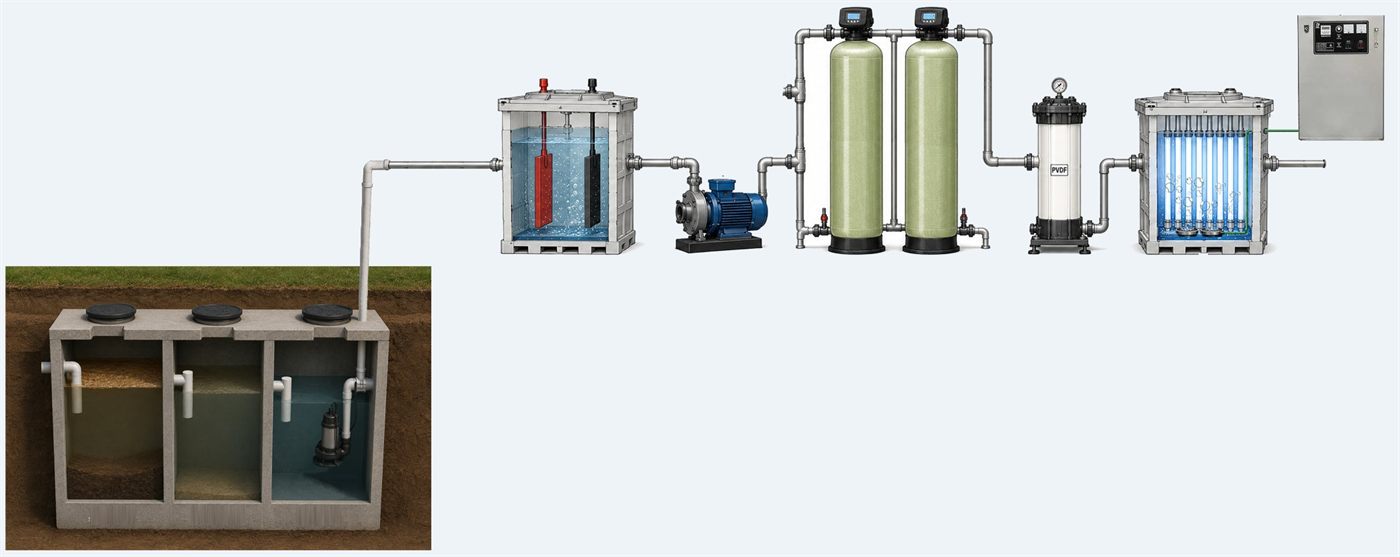
Solids settle out across three chambers; a submersible pump lifts the clarified water.
An electric current releases coagulants from the electrodes; flocs float up and are removed.
A centrifugal pump moves the water on to the filtration stage.
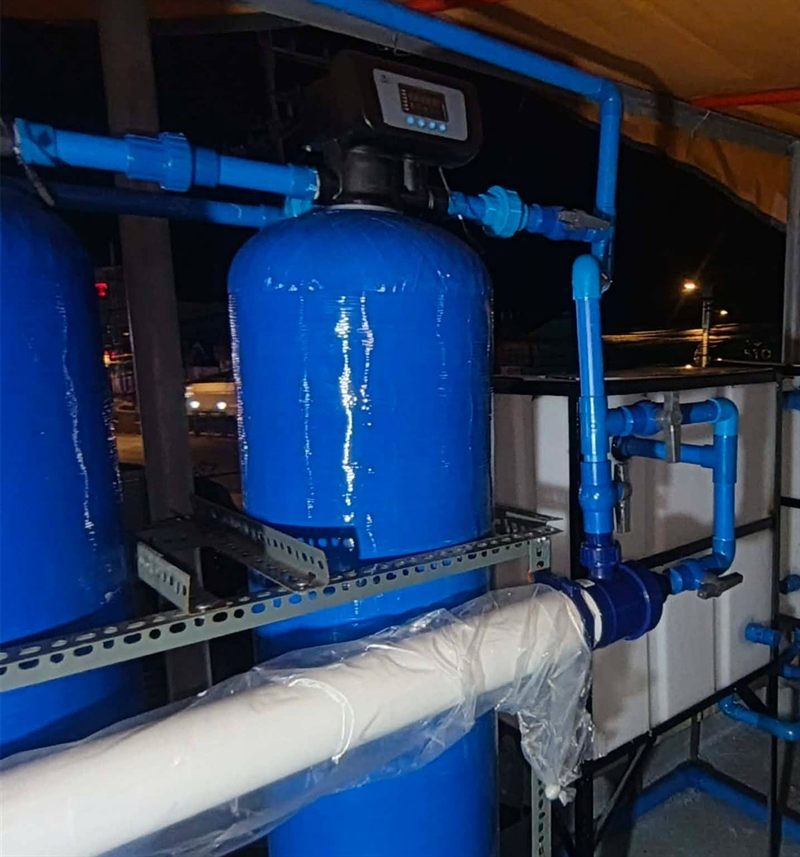
Twin FRP tanks of sand, activated carbon and gravel, with automatic backwash.
PVDF hollow-fibre membranes hold back fine particles and bacteria.
UVC lamps and ozone generate hydroxyl radicals that oxidise and disinfect.
Treated effluent leaves the system for discharge.
01 — The wastewater challenge
Restaurants, hotels, resorts, factories and residential developments all discharge wastewater that has to meet the DENR General Effluent Standards before it leaves the property. When a system is undersized, poorly maintained or ageing, the problems tend to appear in the same places.
Septic conditions in tanks and chambers produce smells that reach kitchens, guests and neighbours.
FOG from kitchens coats pipes, blocks pumps and upsets every treatment stage downstream.
Suspended solids carried through the system show up as cloudy effluent and high TSS.
Biological systems can lose treatment capacity after load spikes, shutdowns or chemical shocks.
Urban sites rarely have room for the large tanks that conventional systems need.
Older plants drift out of specification as equipment wears and wastewater loads change.
What the law expects
Fines under the Clean Water Act are steep, and they add up every day. Knowing that is useful. Knowing exactly where your plant stands, before an inspector, a permit renewal or a failed test tells you, is better.
If nothing changes
Tap a step to start the conversation there.
Every day counts. Let’s talk today.
Under RA 9275, fines range from ₱10,000 to ₱200,000 per day and continue until the violation is corrected. Authorities can also order closure, suspension or cessation of operations. Totals are simple arithmetic on that range, for illustration.
Pick the one closest to your situation. We'll start the conversation there.
We'll look at your plant and your effluent before the inspector does, so you know exactly where you stand and what, if anything, needs fixing first.
Your next stepA pre-inspection check of your plant and effluent.
Get your treatment system reviewed and performing well ahead of the renewal, instead of finding problems when the paperwork is due.
Your next stepA system review well before your renewal date.
Design the STP into the project from the start. Compact, modular HOP units fit where conventional tanks won't.
Your next stepAn STP designed around your building from day one.
Odour, grease, cloudy effluent or failed tests: we'll find out why, then fix it through servicing, optimisation or an upgrade.
Your next stepA site check to find out why, then a fix.
Fines keep running daily until the violation is corrected, so time matters. Talk to us today and we'll help you work out the fastest route back into compliance.
Your next stepA priority conversation about your fastest route back into compliance.
General information, not legal advice.
02 — AQUA-HOP technology
HOP is a physicochemical treatment train. Instead of relying on bacteria to digest waste, it combines electrochemistry, physical filtration and advanced oxidation, so it runs as soon as it is commissioned and can be switched on and off with the facility.
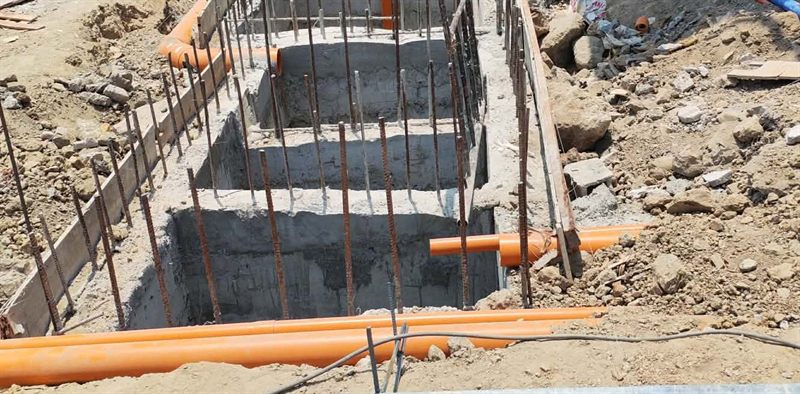
Wastewater first passes through a multi-chamber tank, where heavier solids settle and the liquid clarifies before it is pumped to treatment.
An electric current releases metal ions from sacrificial electrodes. They neutralise the charge on colloids, emulsified oil and fine particles, which clump into flocs and float to the surface for removal.
Twin fibre-reinforced tanks filled with silica sand, granular activated carbon and graded gravel. Digital control heads backwash the media automatically.
PVDF hollow-fibre membranes with pores of roughly 0.01–0.1 µm form a physical barrier against fine particles and bacteria.
UVC lamps and ozone together generate hydroxyl radicals, strong oxidants that break down compounds conventional treatment leaves behind while disinfecting the water.
HOP vs. biological systems
Biological systems rely on living bacteria to digest waste. HOP uses electricity, physical barriers and chemical reactions, which changes how it behaves from day to day.
| Consideration | Biological (SBR, MBBR, MBR) | Hybrid Oxidation Process |
|---|---|---|
| Start-up | Days to weeks to establish biomass | Operates once commissioned |
| Load and toxic shocks | Biomass can be lost; recovery takes time | No living culture to lose |
| Intermittent operation | Needs a steady feed to stay healthy | Can be switched on and off |
| Sludge | Higher volume of biological sludge | Smaller volume of compact chemical sludge |
| Disinfection | Usually a separate chlorination step | Built in through UF, UVC and ozone |
| Footprint | Large tanks for biological contact time | Compact, modular tanks |
| Routine maintenance | Biological monitoring, dissolved-oxygen control | Electrode replacement, membrane cleaning |
A general, qualitative comparison. Actual performance depends on wastewater characteristics, flow rate and system design, and is confirmed through effluent laboratory analysis.
03 — Solutions
Every facility's wastewater is different. We engineer the treatment system around your flow, your effluent targets and the space you have, then build it and keep it running.
Treatment systems engineered around your wastewater, flow and available space, for new facilities or upgrades to existing plants.
Civil works, tanks, piping, pumps and control panels, built and installed on site.
Maintenance, troubleshooting and performance improvement to keep treatment plants running within specification.
Our engineers also work with conventional biological systems, so recommendations are based on your wastewater, not on a single product.
04 — Industries
AQUA-HOP systems are designed for commercial and industrial sites where space is tight, loads vary and effluent quality matters.
Kitchen wastewater with high grease content and loads that swing through the day.
Continuous flows, and no tolerance for odour anywhere near guests.
Sites where treated water returns to sensitive natural surroundings.
Process wastewater with parameters that biological systems struggle to treat.
Shared treatment systems serving many households.
05 — Project experience
We show only what we can verify. More project records are being documented and will be added here.
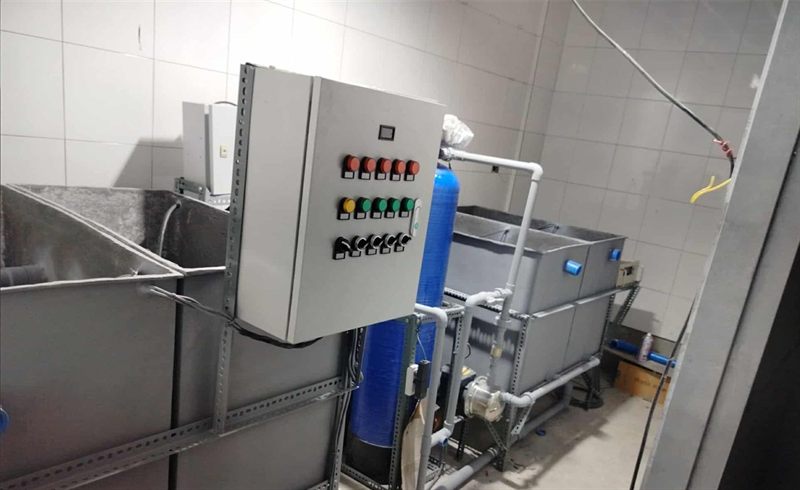
Treatment tanks, media filtration and control panel installed in a dedicated plant room.
Engineering · Technology · Environment
Practical system design and implementation, sized for the facility and built to be operated and maintained.
Treatment processes chosen for the job: electrochemical, membrane and advanced oxidation, alongside proven biological methods.
Responsible wastewater management that protects the waterways every facility ultimately discharges into.
06 — Powered by JEMAN
 Advanced Wastewater Treatment Solutions
 JEMAN Industrial Engineering Services
AQUA-HOP is the wastewater treatment brand of JEMAN Industrial Engineering Services, a multidisciplinary engineering provider working across environmental technologies, renewable energy, automation, fire safety and security systems.
Its wastewater team brings together engineers with hands-on experience in the design, construction and optimisation of treatment systems, spanning conventional activated sludge, SBR, MBBR, MBR, electrocoagulation and advanced oxidation.
Contact
Start here. It takes about a minute.
Let's understand your facility, your wastewater and your treatment requirements.
visits to the AQUA-HOP website